

What We Do
HEAL
HEAL
Holistic Empowerment through Accessible Local-care
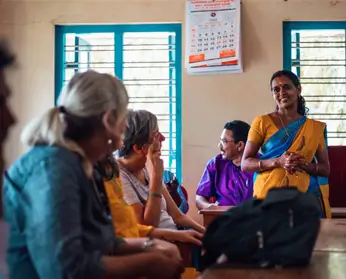
Project HEAL — Holistic Empowerment through Accessible Local-care — is a community-centred mental health and wellness initiative proposed by GramInn, a non-profit charitable organization, for implementation in Panamaram Panchayat, Wayanad District, Kerala. The project responds to a deeply documented and urgent crisis: Wayanad’s tribal and marginalized communities face mental health challenges at rates that are among the highest in India, compounded by acute poverty, substance dependence, social isolation, and the lasting psychological wounds of the July 2024 landslide disaster.
Kerala’s suicide rate has climbed to 30.6 per 100,000 population (NCRB 2023), the highest among major Indian states and more than 2.5 times the national average of 12.3. Wayanad, with its disproportionately high tribal population (18.5% of the district versus 1.5% state average), records even more acute mental health distress. In Panamaram’s tribal colonies, alcohol use disorders exceed 60% among men; 15% of adolescents are already engaged in harmful substance use; and depression affects 14% of those above 70 years of age. Nearly 75% of the primary workforce (aged 30–39) reports significant occupational stress.
Despite Kerala’s lauded public health achievements, mental health services remain institutionalised and inaccessible to the rural poor, tribal communities, persons with disabilities, widows, and the elderly. Project HEAL directly addresses this gap by establishing a decentralised, culturally sensitive Community Wellness Centre in Panamaram — bringing psychological care to the doorstep of those who cannot reach institutions, and equipping local communities to sustain this care long after external support ends.
The project is anchored in three core pillars: clinical accessibility (free psychological consultations, mobile outreach), preventive community action (youth ambassador networks, school-based risk identification, mental health literacy), and sustainable community ownership (ASHA/Anganwadi capacity building, self-help group linkages, and a locally trained Health Task Force). This report presents the full rationale, data evidence, objectives, implementation strategy, budget, and sustainability plan for Project HEAL, for submission to relevant government bodies, funding authorities, and civil society partners.
HEAL Components and Implementation Strategy
Component 1:
The Community
Wellness Centre

The physical and operational heart of Project HEAL will be a Community Wellness Centre established within or adjacent to the Panamaram Panchayat premises, ensuring visibility, legitimacy, and accessibility. The Centre will operate six days a week, with designated hours for different community groups to ensure that no group — by gender, age, or mobility — is systematically excluded.
Services Offered:
- Individual psychological consultations (free of charge) by a qualified Clinical Psychologist
- Group counselling sessions for families dealing with substance abuse and domestic stress
- Crisis intervention and suicide risk assessment with clear referral protocols to district-level services
- Mental health screening camps (monthly) using validated tools including PHQ-9, GAD-7, and AUDIT
- Medication counselling and adherence support for those already receiving psychiatric treatment
- Dedicated women-only sessions twice weekly, with a female psychologist and female social worker
Component 2:
Mobile Outreach
Teams
Recognising that the most vulnerable community members — persons with disabilities, the elderly, and those with severe mental illness — are also the least likely to reach a physical centre, Project HEAL will deploy a Mobile Outreach Team (MOT) covering all tribal colonies, agricultural worker settlements, and remote hamlets within Panamaram Panchayat.
Mobile Team Composition (per visit):
- One qualified Psychiatric Social Worker or Clinical Psychologist
- One trained Community Health Volunteer (from the ASHA/Anganwadi network)
- One trained Youth Health Ambassador
The MOT will conduct home visits on a fortnightly schedule, maintaining a case register and referral log. Priority will be given to households where a member has been identified as being at risk of suicide or self-harm, households dealing with active substance dependence, elderly persons living alone (particularly widows), and families with disabled members without a primary caregiver.
Component 3:
Adolescent Risk
Identification Network
(ARIN)
Working in partnership with local schools, ASHA workers, and Anganwadi centres in Panamaram, Project HEAL will establish the Adolescent Risk Identification Network — a structured early-warning system for mental health distress among children and adolescents.
Key Activities:
- Orientation workshops for teachers in all primary and secondary schools within the Panchayat on recognising signs of depression, anxiety, substance use, and suicidal ideation
- Monthly peer-support circle sessions in schools, facilitated by trained Youth Health Ambassadors
- Establishment of a Panchayat-level ‘Wellbeing Register’ to track at-risk children and ensure coordinated follow-up
- After-school recreational and creative programmes designed as non-clinical entry points into mental health support
- Sensitisation of parents in tribal colonies on the links between home environment, alcohol exposure, and adolescent mental health
Component 4:
Workforce Wellness Programme
The primary workforce of Panamaram — agricultural labourers, plantation workers, and daily wage earners, particularly those in the 25-39 age group — reports extraordinarily high levels of occupational stress (approximately 75%), driven by financial insecurity, crop failure, debt, and the collapse of work-life boundaries. This cohort is also at elevated risk of suicide, as documented in a psychological autopsy study of 166 farmer suicides in Wayanad (PMC, 2024).
Interventions:
- Monthly group stress-management workshops at Panchayat office and colony meeting spaces
- One-on-one financial stress counselling in coordination with bank representatives and SHG facilitators
- Life skills training sessions covering debt management, family communication, and coping strategies
- Linkage with Kudumbashree units and cooperative societies for livelihood diversification support
Component 5:
Elder Care and
Wellbeing Camps
The elderly population of Panamaram — particularly women above 70 years — face a dual burden of physical isolation and mental health distress, with depression affecting an estimated 14% of this cohort. Their suffering is largely invisible, addressed neither by clinical systems nor by community networks that have increasingly dispersed due to migration and economic pressures.
- Bi-monthly Wellbeing Camps at accessible community spaces, combining mental health screening, geriatric health check-up, social activities, and nutritional support
- Formation of Elder Peer Groups — monthly social gatherings that provide sustained connection between camps
- Home-based befriending visits for isolated elders by trained Youth Health Ambassadors
- Yoga, reminiscence therapy, and inter-generational storytelling sessions that honour the wisdom of elders while addressing isolation
Component 6:
Mental Health Literacy
and Tribal Sensitisation
Mental health literacy — the ability to recognise, understand, and respond to mental health conditions — is critically low across Panamaram’s tribal communities. Cultural explanatory models for distress (attributing depression to supernatural causes, for instance) create barriers to help-seeking that must be addressed through culturally competent programming, not clinical imposition.
- Community awareness sessions in tribal colonies conducted in local dialects, with tribal community members as co-facilitators
- Nuanced communication materials developed with tribal elders and Panchayat members, blending modern mental health knowledge with traditional healing frameworks
- Capacity building of all ASHAs and Anganwadi workers in Panamaram on Psychological First Aid (PFA), aligned with WHO and NIMHANS guidelines
- Dissemination of rights under the Mental Health Care Act 2017, including the right to free treatment, the right to confidentiality, and protections against discrimination
- Integration with the Suchitwa Mission and local self-government bodies for sustainable programme anchoring
Component 7:
Youth Health
Ambassador Programme
The Youth Health Ambassador Programme is the engine of Project HEAL’s community sustainability. Twenty-five young persons — drawn from tribal colonies, agricultural worker families, and other marginalised households — will be selected, trained, and supported to serve as first responders, bridge-builders, and stigma-breakers in their own communities.
Training Curriculum (40 Hours):
- Introduction to mental health, common conditions, and early warning signs
- Psychological First Aid (PFA) — WHO standard protocol
- Active listening, crisis de-escalation, and referral skills
- Suicide prevention: recognising risk, responding safely (QPR model)
- Community advocacy, destigmatisation communication, and peer support facilitation
- Self-care for helpers: managing secondary trauma and burnout
Ambassadors will receive ongoing monthly supervision from the Project Psychologist and will be recognised through a formal certification from GramInn and the Panchayat. Their roles are entirely voluntary and community-driven, ensuring that the programme is driven by intrinsic motivation rather than financial dependency.